
The Real Cost of Senior Housing
What families need to know before they start comparing options
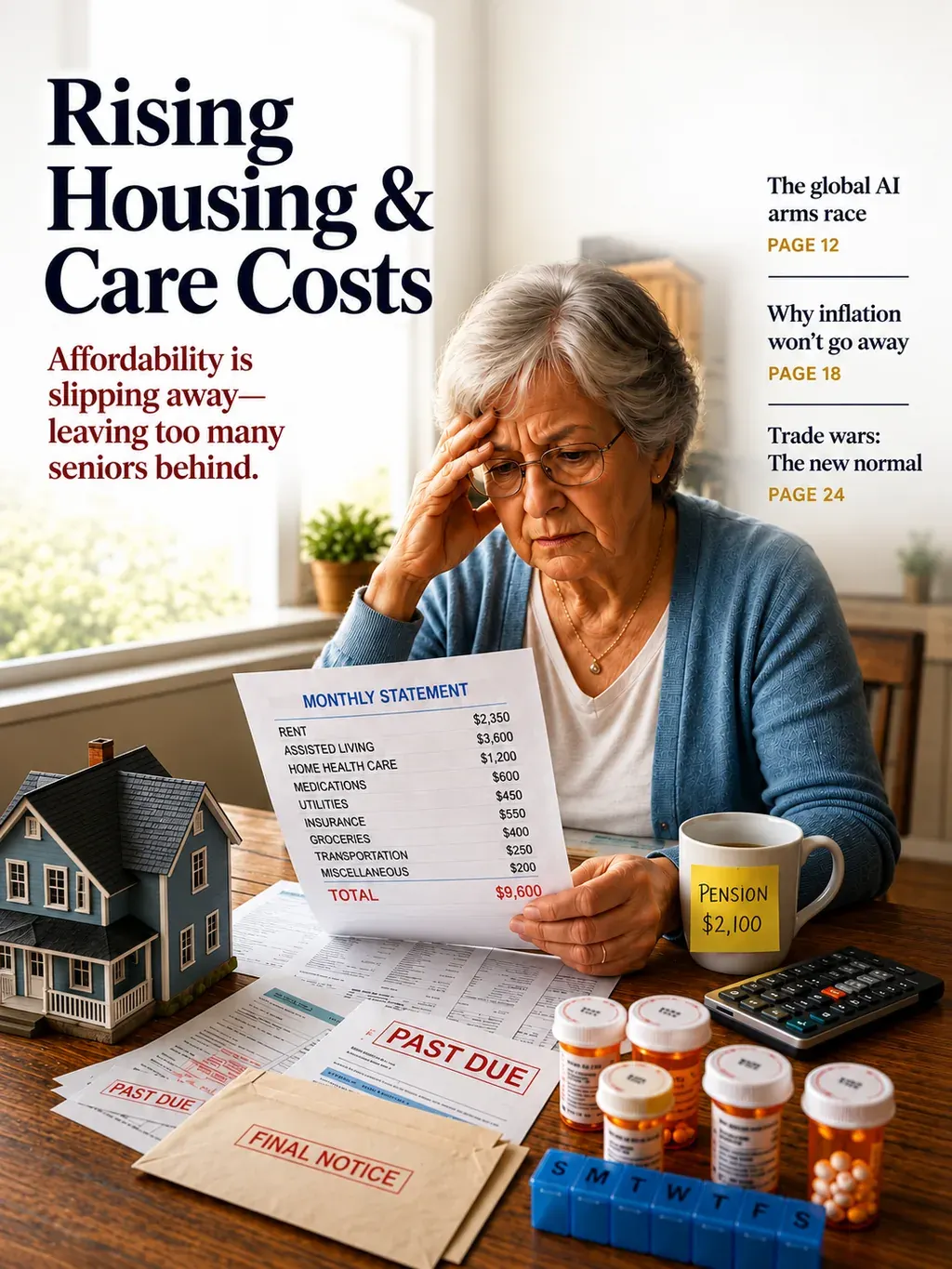
There is a moment in most families when the question shifts from "Should we start looking?" to "How much is this actually going to cost?" It happens at kitchen tables, in parking lots after difficult doctor's appointments, and in late-night phone calls between siblings who live in different states.
The honest answer is: it depends. But that answer, while true, is not very useful. What families actually need is a framework — a way to understand not just what senior housing costs today, but what drives those costs, what's included, and how expenses are likely to change over time.
Why the Numbers Vary So Widely
Senior housing is not a single product. It is a spectrum of living arrangements, each built around a different level of support.
At one end, independent living is designed for older adults who want a simpler, maintenance-free lifestyle — no more lawn care, no more fixing the furnace, meals available when you want them. At the other end, memory care delivers round-the-clock specialized support for individuals living with Alzheimer's or dementia, with enhanced staffing, secure environments, and structured programming.
Between those two poles sit assisted living, adult family homes (licensed private homes caring for a small number of residents, common in Washington), continuing care retirement communities, affordable senior housing, and the option many families don't initially think of as "senior housing" at all: aging in place with professional support. Nursing homes, for people who need skilled medical care every day, sit beyond memory care and cost more still.
Each has a different pricing structure. Each includes different services. And each carries a different set of long-term financial implications.
Independent Living: The Entry Point
Independent living is generally the most affordable of the senior housing options — not because the communities are less desirable, but because they don't include daily personal care.
Monthly fees typically bundle together rent, utilities, maintenance, housekeeping, meals, transportation, and social activities. For many older adults, the value isn't just financial. It's the relief of a more manageable daily life, surrounded by peers, with responsibilities lifted.
If your parent is active, healthy, and simply ready for a change, independent living often delivers an exceptional quality of life at a cost that surprises families — sometimes favorably.
Assisted Living: Housing Plus Care
When personal care enters the picture, so does a higher price tag. Assisted living communities provide housing alongside help with the activities of daily life — bathing, dressing, medication management — along with meals, housekeeping, and social support.
What many families don't realize until they're deep in the process is that assisted living pricing is often tiered. The base rate covers housing and a baseline of services. As care needs increase, monthly costs typically rise with them. A resident who needs minimal assistance today may need significantly more in two years.
This is one of the most important questions to ask any assisted living community: How is pricing structured, and how might it change as my loved one's needs evolve?
Memory Care: Specialized Support at a Premium
Memory care usually carries the highest monthly costs of any senior housing option short of a nursing home, and for good reason. These communities require enhanced staffing ratios, purpose-built physical environments, and specialized programming designed around the unique needs of individuals living with cognitive decline.
The higher price reflects not just care, but expertise and safety. For families navigating dementia, memory care provides something that cannot be easily quantified: peace of mind.
CCRCs: Stability at a Price
Continuing care retirement communities, known as CCRCs, offer something the other options generally don't — a contractual commitment to care across multiple life stages. Residents move in while they're healthy and independent, knowing that if their needs change, the community will be there to meet them.
The pricing model is distinctive. CCRCs typically charge a substantial entrance fee — sometimes quite large — plus an ongoing monthly fee that covers housing, meals, maintenance, and access to higher levels of care if needed.
For families who value long-term predictability and want to avoid the disruption of multiple moves, CCRCs can be a sound investment. But the contracts are complex, and careful review before signing is essential.
Learn more in the guide to CCRC costs.
Affordable Senior Housing: Real Options for Limited Budgets
Not every family is working with unlimited resources, and the senior housing industry has pathways designed for those with more modest means. Affordable senior housing programs typically offer income-based or subsidized rent, making them accessible when private-market options are not.
The tradeoff is availability. Waitlists are common, sometimes stretching months or years. If affordable senior housing is likely to be part of your plan, the time to apply is before the need becomes urgent.
Learn more in the guide to affordable senior housing.
Aging in Place: Freedom With Fine Print
Many older adults want to stay home. It's where their memories live, where they know every corner of every room, where they feel most like themselves. Aging in place with professional support makes this possible — through in-home care, meal delivery, transportation assistance, housekeeping, and home modifications that improve safety.
What families often underestimate is how costs can escalate. Aging in place may begin as the most affordable option. As care needs grow, however, the hours of in-home support multiply — and so does the monthly expense. At some point, a senior living community may become not just more supportive, but more cost-effective.
The comparison is worth making carefully, with real numbers.
The Questions That Matter Most
Before choosing any senior housing option, these are the questions every family should be asking:
- What is the monthly base rate — and what exactly does it include?
- What services cost extra?
- Is there a second-person fee?
- How often do rates increase, and by how much?
- What happens if care needs change?
- Is there a move-in fee or deposit?
The goal is to understand the true monthly cost — not just the advertised figure — and how that cost is likely to change over time.
Cost Is a Factor. It Shouldn't Be the Only One.
Senior housing costs are real, and planning for them matters. But the families who make the best decisions are the ones who weigh cost alongside safety, support, quality of life, and the specific needs of the person who will actually be living there.
The right answer is different for every family. What stays the same is the importance of asking the right questions early — before a health crisis forces a rushed decision — and building a plan that can flex as circumstances change.
When the time comes to make a move, a senior move manager can help coordinate the transition, reduce the stress of relocating, and make the process feel less overwhelming for everyone involved.
These guides explain senior housing decisions in plain language. Explore the full library of senior housing guides and resources.